
Simpsonville Previous Residents by Era
One Simpsonville address has several time layers. The parcel card supplies a current tax-year reference; the Register of Deeds records transfer instruments; library directories and census schedules can add household context; and historic newspapers or probate files can test a dated change. No single source supplies a complete roster. Start with the record whose date matches the question, then carry the map number and legal description forward when a street address becomes uncertain.
| Source | Years It Covers | Where Held | What It Shows |
|---|---|---|---|
| ROD recorded-document search | 1985-present, as stated by the gateway | Greenville County Register of Deeds online search | Party, instrument, book/page, recording date, and legal-description trail |
| ROD earlier indexes and books | Before 1985 workflow; historic county material reaches 1787-present | ROD index folders, microfilm, books, and counter | Grantor/grantee route to book and page for earlier transfers |
| Property cards | Selected current tax year and voided-card path | Greenville County Real Property Search or office | Map number, owner, situs, mailing address, and legal description |
| Directories | Holdings reported from 1883; Simpsonville continuity is unverified | South Carolina Room and in-library databases | Address or household entry when the chosen volume covers it |
| Federal census | Released on a 72-year schedule | Library databases and federal archival sources | Household composition and enumeration context |
| Newspapers and obituaries | Historic South Carolina papers 1777-1963; Greenville News 1999-present | Library databases and South Carolina Room | Move, death, probate, and community context |
For a recent transfer, use the ROD index after the property card. For an earlier household question, first identify an available directory or census year and then compare it with the parcel's legal description. An address alone is not a stable historical identifier.
Simpsonville Previous Residents Parcel Start
Greenville County Real Property Search is the practical starting point for a Simpsonville address. Select the tax year, then search by street, owner-style name, 13-digit map number, subdivision, or sales sheet number. Preserve the named owner, tax year, map number, situs address, mailing address, legal description, and any sale or deed reference. The situs address is where the taxed property sits. The mailing address is where the county sends tax correspondence, and it is not a statement about who lives there.
The 13-digit PIN is especially useful because it bridges assessment records, GIS, plats, and deeds even when a road name or subdivision search changes. It has sheet, block, and lot portions. The county warns that square-footage, bedroom, and bathroom details may lag during a current software transition, so use the map number, legal description, tax year, and recorded deed as the cross-checking core.
Note: A named property owner can be a trust, estate, entity, or remote owner, so ownership and occupancy are separate questions.
Simpsonville Previous Residents Past 1985
The 1985 date is a research handoff, not the beginning of Greenville County records. The ROD gateway states 1985-present coverage for its current recorded-document search. Before that boundary, the county's documented method is to select the appropriate document folder, consult a grantor or grantee index, obtain book and page, then use the book, microfilm, or ROD counter. The ROD's broader historical description reports grantor, grantee, mortgagor, and mortgagee indexes from 1787-present, deed images from 1787-present, mortgage images from 1919-present, and plat images from 1903-present.
That distinction prevents a common error in work on past residents. An unsuccessful current gateway search does not establish that an older transfer is missing. It identifies the point where the method changes. The ROD also links deed-book images before 1800, while the reconstructed Land Grant Book B index for 1785-87 warns of missing pages and name variants. Treat an index as a finding aid and confirm the underlying record when available.
Simpsonville Previous Residents Deed Chain
A deed chain follows recorded property transfers backward from a confirmed parcel. The county's current ROD search accepts name, instrument number, book/page, and legal-description research, while its historical route relies on the older index books. Use the legal description and record date as safeguards. Street addresses can be absent from older instruments or can describe a road differently, but the land description and plat reference can identify the same parcel.
- Open the current property card and write down the named owner, selected tax year, 13-digit map number, situs, and legal description.
- Search the named owner in the Greenville County ROD index in Last First form, narrow to a deed where appropriate, and compare the recording date, instrument or book/page, and legal description to the parcel.
- Read the identified transfer to find the former grantor. Then search that former grantor as an earlier grantee, testing the same legal description before accepting a match.
- Repeat the grantee-to-earlier-grantor sequence, preserving each instrument reference and transfer date in order.
- At the 1985 boundary, move to the applicable pre-1985 folder and grantor/grantee index, obtain book/page, and consult the book, microfilm, or ROD counter.
- Grantor
- The party transferring an interest in the recorded instrument, often the prior seller in a deed.
- Grantee
- The party receiving the recorded interest. A former grantor can be searched as an earlier grantee to continue backward.
- Chain of title
- The dated sequence of recorded transfers for the same parcel, tested through each instrument rather than inferred from names alone.
- Legal description
- The parcel's lot, block, subdivision, metes-and-bounds, or related land description used to distinguish it when an address changes or is absent.
Recorded deeds show transfers, not a full list of people at an address. A person can also appear in an estate, trust, or other party role, so the document type and the exact role matter.
Note: A matching street name is not enough; retain the legal description before joining two historical transfer records.
Simpsonville Previous Residents at SC Room
The South Carolina Room at Hughes Main Library is the local fallback when a web index stops. It is on the second level at 25 Heritage Green Place, Greenville, South Carolina 29601. The room recommends appointments and can be reached at 864-527-9212 or scroominfo@greenvillelibrary.org. Its house-history material directs researchers to old property cards, deeds and plats online or on microfilm, city directories, maps, newspapers, vertical files, historic-resource surveys, and local histories.
For a limited remote request, give staff the address or parcel, year range, name variant, and precise record group. The published request service describes categories including Greenville News obituaries, death certificates, marriage announcements or licenses, newspapers, deeds, and probate, with five-business-day processing and listed per-category fees. Eligible library-card holders have a limited no-cost monthly allowance for specified vital and newspaper requests. This is a focused research route, not a request for a general people list.
The room has limited residence photographs and no blueprints. Ask which source years and record groups document the address, parcel, or community.
Simpsonville Previous Residents Map Check
Use maps to test an address claim, not to replace the deed chain. The Library of Congress catalogue identifies a June 1930, four-sheet Sanborn Fire Insurance Map for Simpsonville, Greenville County. Its catalog record says it is not digitized. The South Carolina Room's house-history materials also name the 1923-24 Greenville City Block Book, held on microfiche, along with the 1882 Kyzer and 1825 Mills Greenville County maps.
No authoritative source in the research documented a citywide Simpsonville renumbering year. Compare historic plats, legal descriptions, map sheets, directory entries, and the correct municipal boundary for the year. A Greenville block book is city context, not evidence that a particular Simpsonville property is included.
The South Carolina Archives Index offers a separate index route for land-grant plats and other historical material.
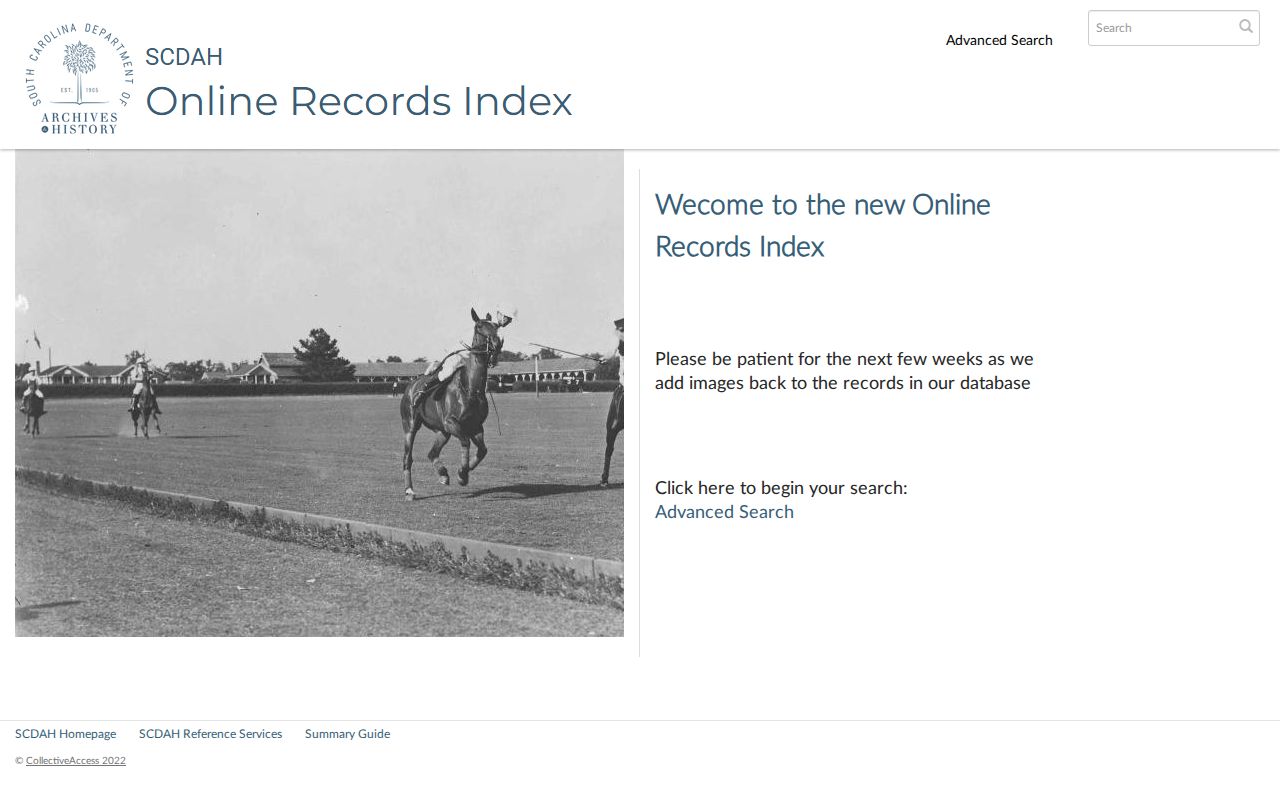
Archive-index results identify historical source material and should be paired with the cited repository record or image.
Simpsonville Previous Residents and Census
Deeds track an ownership trail. To learn who lived here before, pair the land trail with a directory that demonstrably covers the name or address and with released census schedules. The South Carolina Room lists city directories under SC 917.5727, while in-library Ancestry Library Edition and HeritageQuest provide another city-directory and census channel. The collections themselves, including publisher runs and year gaps, are described on the Simpsonville city directory page.
- Choose an available directory year close to the transfer or census period and copy the full entry, page, title, and abbreviation key.
- Use an address or reverse section only when that volume actually has one, then compare it to the alphabetical entry from the same year.
- Match the directory's date to the nearest released federal census, recording the enumeration year and district rather than treating a later index as the original record.
- Compare each household clue with the property card, deed date, map context, and any newspaper or probate evidence.
A directory disappearance can reflect a move, death, marriage-name change, omission, changed coverage, or altered address. It is a prompt for another dated source, not proof of one outcome.
Simpsonville Previous Residents in Probate
Probate and obituary records can close a historical household trail when used through their proper custodians. An obituary may name survivors or community connections. A Greenville County Probate Court estate can identify a personal representative, heirs, or a property-distribution path. Neither source should be used to presume that a current address remains connected to a person or family after the historical event.
The library genealogy resources list historic newspapers and HeritageHub death notices, while Greenville County Probate Court offers public access and record-copy channels. Preserve the event date, publication or case reference, and source repository. For a marriage clue, Greenville County's name-and-year search can be a lead, but the actual permitted record or copy comes through the court or authorized state path.
Lawful personal research. Simpsonville house and family history work should stay focused on documented past events. Never use a record trail to harass, threaten, surveil, or track a living person.
Simpsonville Historical Records Handoff
Greenville County Historical Records is a separate digitized portal for historical probate, Register of Deeds, court, and related collections. Its collection information says associated microfilm is available at the South Carolina Room and county custodian offices. That creates a practical three-part chain: historical scan online, microfilm or research help at the library, and the responsible county office for the custodian record.
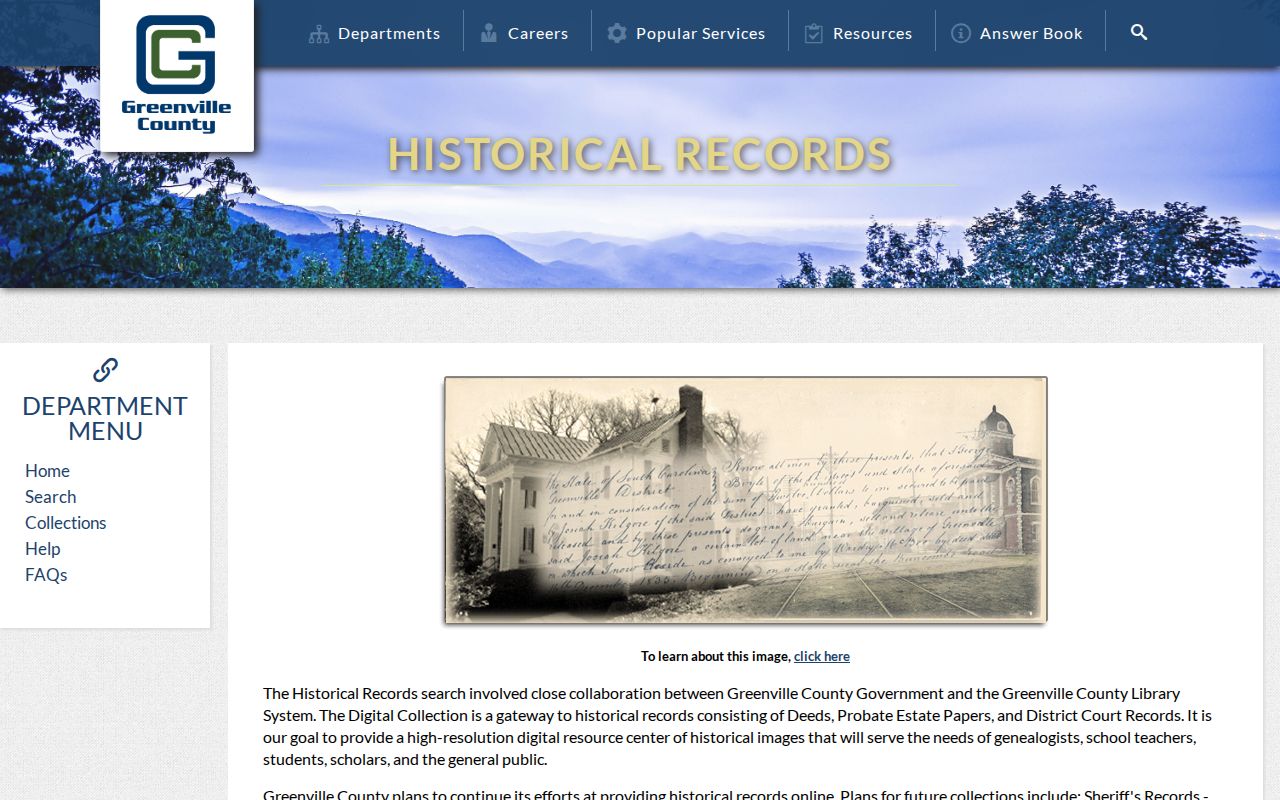
The portal can bridge an older book reference, while the library and custodian routes remain necessary when no digital item appears.
For a defined municipal permit, planning, annexation, or code record tied to a Simpsonville address, the City's Public Records Request Portal is another documented channel. Request the specific address, date range, and record type. The written form also permits mail, pickup, or email delivery. Public bodies respond to identifiable records under the South Carolina FOIA; they do not create a historical resident list.
Note: Keep the portal link, call number, book/page, map number, and legal description together so another source can be checked later.